 Nonprofits need to organize their projects as the means of implementing policies,
initiatives and directives, and group similar projects together. Nonprofits need to organize their projects as the means of implementing policies,
initiatives and directives, and group similar projects together. In this case study, a nonprofit working with disadvantaged youth ran programs to keep kids in
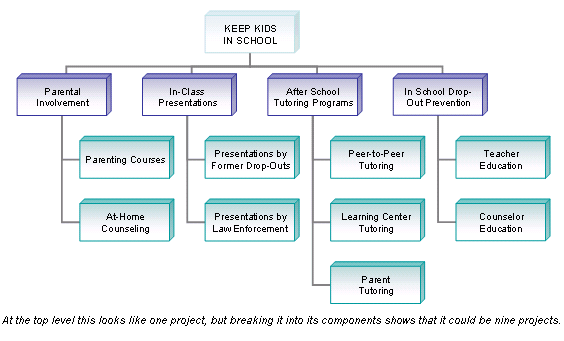
school. Their four main programs consisted of:
- Parental Involvement
- In-Class Presentations
- After School Tutoring
- In-School Drop-Out Prevention.
What they in fact called "Keep Kids in School," was one project to them, but at least four projects above, and, after a closer look, the nine separate subprojects shown in the work breakdown
structure (WBS) below.
Trying to run these projects from the "Keep Kids in School" level was blending nine related, but different projects into a blur. Identifying
individual projects allowed tasks in one project to be distinct from tasks in another.
These nine represented only a few of what turned out to be over 100 projects that this well-funded, but over-burdened non-profit was hoping to manage with 8-9 people. Separating projects from non-projects and building a WBS out of the project inventory showed a
projects-to-people ratio over 10-to-1, longer odds than at most horse races. Either more staff or fewer projects would be needed; otherwise quality would have to give, as it had been.
"
8-9 people working on 100 projects means quality will suffer."
Now informed decisions could be made. Justification for additional staff had been validated, as had a
reduction in the initiatives that the Board had recommended. Reality and expectations were coming together.
Meanwhile, the non-profit had been combing through its project list to combine
similar projects. For example, they were offering
several training programs that needed to be managed more like a curriculum than separate projects. Parenting programs, high school
programs, single parent programs and other project groups soon began to come together.
Partnering gained a higher priority. Various project partners – parents, teachers, schools, law enforcement, and advisors – were
involved in these projects, so to a certain extent many of the partners needed to take more responsibility for their annual, semi-annual or quarterly projects.
People, projects, policies and budgets came together for this nonprofit in a surprisingly short time as better organization led to strategies for taming the mix of projects. For more, see Multiple Projects, Scheduling or
Project Management workshops.
More PM Tips
to receive notices of new PM Tip Sheets as they are published.
to leave the PM Tip Sheets subscription list.
Privacy Policy: Email addresses are for the topic of correspondence only. |